
Media Literacy is a 21st-century approach to education. It provides a framework to access, analyze, evaluate, create and participate with messages in a variety of forms — from print to video to the Internet. Media literacy builds an understanding of the role of media in society as well as essential skills of inquiry and self-expression necessary for citizens of a democracy.” ~ Center for Media Literacy
This video below (starring Joey Papa, who I didn’t previously know, but now respect) is short, compelling and starts the conversation I’m having this week (and, really, I touch on the topic weekly, be it with discussions of literature, digital citizenship, or online safety.
“Media literacy is the ability to ACCESS, ANALYZE, EVALUATE, CREATE, and ACT using all forms of communication. In its simplest terms, media literacy builds upon the foundation of traditional literacy and offers new forms of reading and writing. Media literacy empowers people to be critical thinkers and makers, effective communicators and active citizens.” ~ NAMLE (National Association for Media Literacy Education)
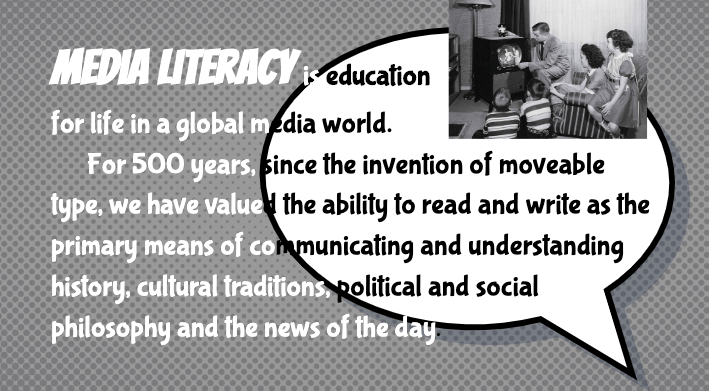
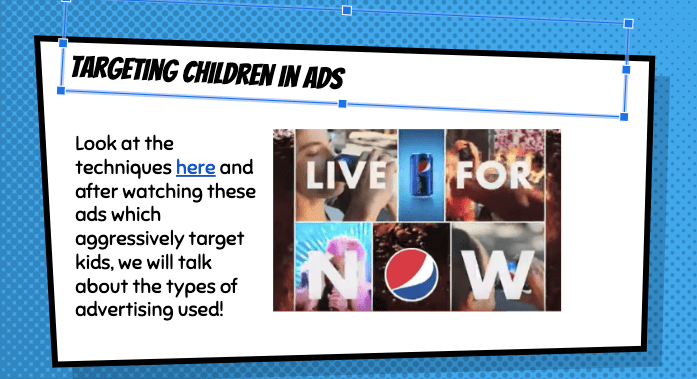
Here are a few slides from the Media Literacy lesson I’m presenting with the 4th and 5th graders.
“Media Literacy describes the act of being capable of handling different forms of media and being competent, critical and literate.” ~ Urban Dictionary (Defined with no swears! That’s pretty rare, actually!)
If you want to go deeper into the myriad elements of “media literacy” here is the CML’s “glossary.”
#MediaLitWk

 Mrs. Rossi's Library Tech Page!